


 One One is an integral arm of the GEC (Global Earth Cooperative), more fully described in our History section. SF1 exists both to project and to protect - objectives achieved through our deep space exploration and environmental monitoring roles.
What you are looking at here is our Heritage Website. It is a homage to the early websites that were developed from the late 20th century. This was a time when the so called World Wide Web (WWW) transformed how humans interacted.
Unlike today, webpages were primarily text and graphics, displayed on flat screens and navigated by a physical pointing device or by touch. This simple approach enabled the population to create their own global presence using basic software tools. For the period in question it was transformative.
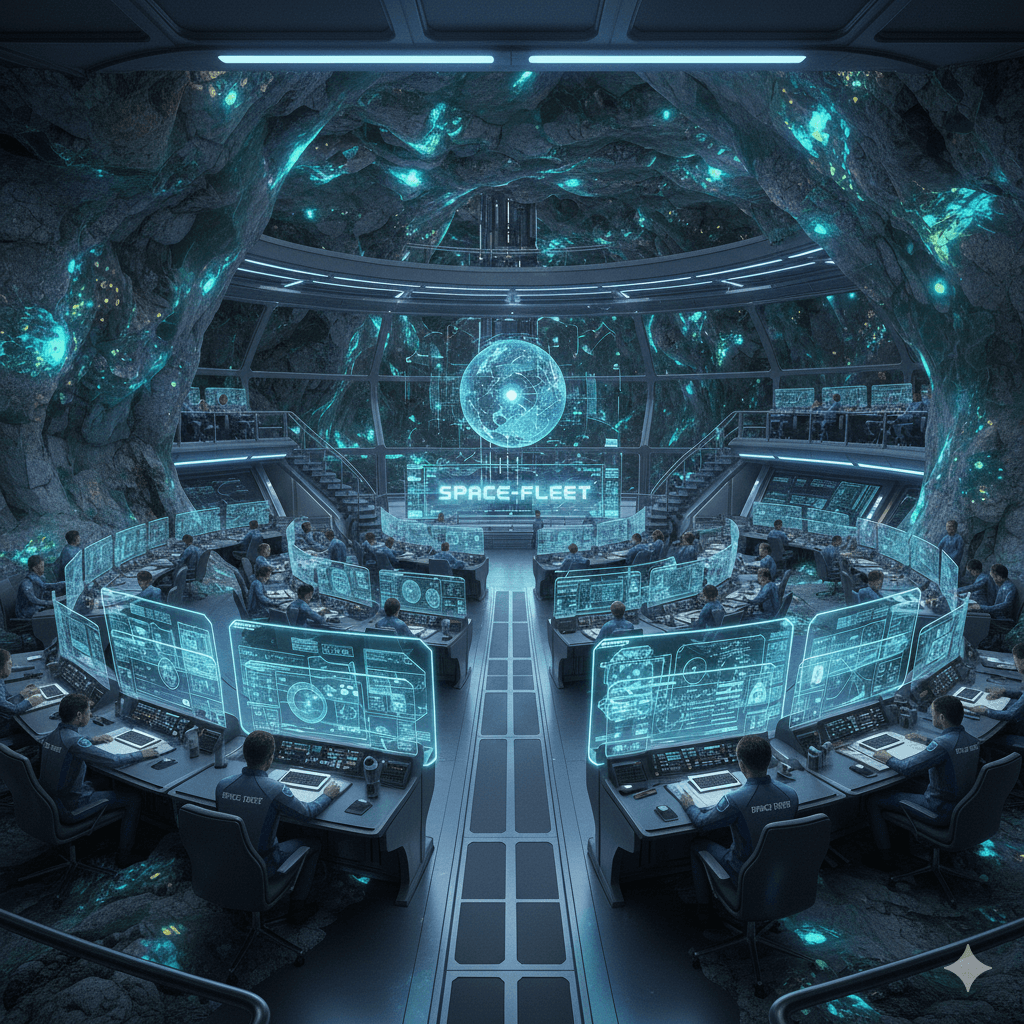 Our iconic Berners-Lee communications centre is a homage to Tim Berners-Lee, who created the WWW and championed this public open access. He is quoted as saying that ‘the goal of the Web is to serve humanity. We build it now so that those who come to it later will be able to create things that we cannot ourselves imagine’. Looking back a century later we think you'd agree that Tim's hopes were met.
The creation and sharing of information and ideas has clearly changed radically since those days, but it is instructive to understand that period of history to best appreciate how Earthkind has since developed. It wasn't an admirable period for mankind, as our History section outlines.
Notes:
As stated, this website was set up as a homage, and covers only a fraction of GEC and SF1 activity. Information was current only at the time of development - contact the agencies directly through the usual channels for a more comprehensive and current account.
Note also that all quoted dates are based on the historic Gregorian Calendar, whose origin (Year 1) was dictated by religious beliefs of the time. For perspective, the Solar Inflection Point, which presaged The Dark Age, occurred around the mid 21st Gregorian century, effectively the statrt of our current Earth Time.
This project was undertaken as a joint venture between the Data Justification Team and the Gagarin Training Academy. We would like to thank the DJT and GTA for their support and also Kanji Stone ( ) for their design concept.
Looking at our history, it is telling that we know more about mankind prior to the Internet than that period leading up to the Solar Inflection.
Looking back at our history prior to the Solar Inflection Point much of our behaviour is difficult to comprehend for our new generations:
TribalismFor most of its existence, tribalism was an inherent feature of mankind. This provided a number of benefits.
Drawbacks:
Multiple organisations support the objectives of both the GEC and One One. On this page we look at some of our agencies that have historic connections. The Berners-Lee communications centre has been mentioned previously; here are some other significant bodies:
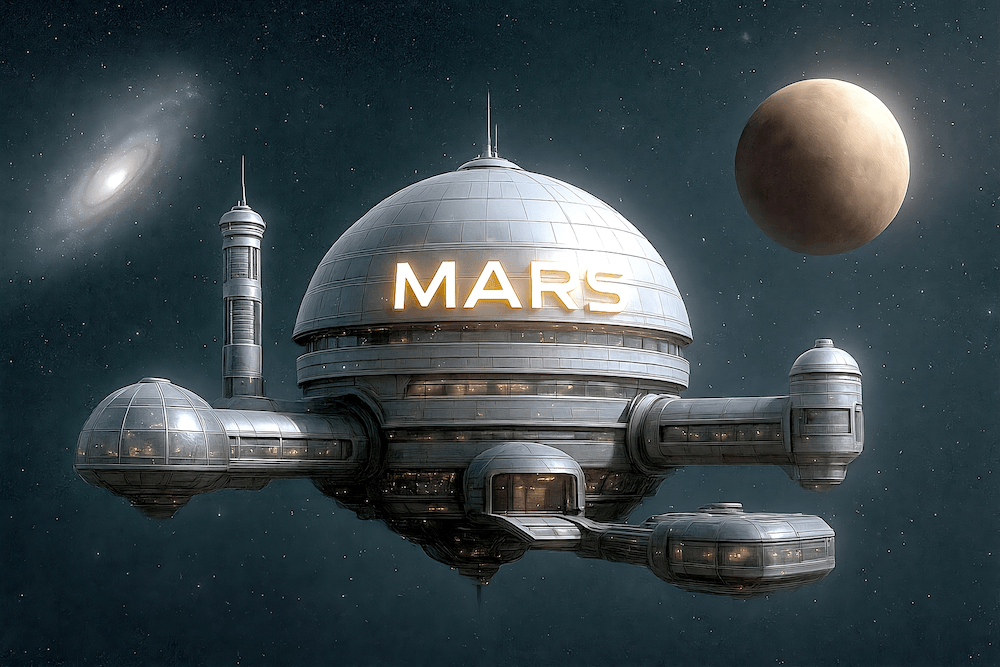 Musk Atonement Research Station
Prior to the Dark Age, wealthy entrepreneur Elon Musk became a major proponent of ecological development and space travel. Indeed, he was once quoted as saying ‘For me it was never about money, but solving problems for the future of humanity’. It is known that the accumulation of treasure and power led Musk to stray from this ideal and exhibit behaviour detached from humanity's best interests. However, for reasons not fully understood Musk later repented and sought absolution by founding the original Research Station. The Station now symbolises both human progress and the power of redemption. For this we can all be truly grateful.
Musk Atonement Research Station
Prior to the Dark Age, wealthy entrepreneur Elon Musk became a major proponent of ecological development and space travel. Indeed, he was once quoted as saying ‘For me it was never about money, but solving problems for the future of humanity’. It is known that the accumulation of treasure and power led Musk to stray from this ideal and exhibit behaviour detached from humanity's best interests. However, for reasons not fully understood Musk later repented and sought absolution by founding the original Research Station. The Station now symbolises both human progress and the power of redemption. For this we can all be truly grateful.
Regrettably the Station itself could not be built on Mars. It remains spaceborne, although to a design rather different to this early render!
Capek Cyborg Research Institute Josef Čapek was an artist from around the turn of the 20th century known for coining the term 'robot'. This word gained wide recognition when fictionalised by his writer brother Karel. The science of Robotics has cemented the Čapek brothers position in history, as the CCRI recognises (the CCRI incorporates both cyborg and robotic sciences).
Area 51 Outreach Program This is our foremost program for all contact with Exoplanetary Lifeforms (EL). Despite our best research efforts we were unable to identify the source of this program, although we have heard many rumours.
Historically mankind has been poor in separating myth and conjecture from fact. The AOP is charged with monitoring EL to ensure that there is a credible record and that the GEC remain aware of the risks and rewards of such contact.
Vincent Genetic Research Institute (VGRI) Apparently Gene Vincent was a popular 20th century singer. This is a happy coincidence, as the name is actually a nod to the central character in Gattica, a critically acclaimed late 20th century science fiction feature. Vincent aspired to space travel but faced challenges because of his genetic makeup. The VGRI conducts research primarily to support genetic enhancement and medical gene therapy.
Einstein Temporal Research Institute Albert Einstein was born in the 20th century and known for developing the theory of relativity. The ETRI builds upon subsequent efforts to develop a Unified Field Theory, and to investigate spacetime displacement. Our development team asked the ETRI to consider piping this demonstration website to the early 21st century Internet. We understand there are both technical and moral objections to this proposal, but remain confident that this site will be made available in some form. (However note that we are advised that the site is more likely to be censured than appreciated as a warning from the future.)
Gagarin Training Academy Yuri Gagarin was an courageous pilot who became the first person to enter outer space and orbit Earth. This feat had been undertaken earlier by Laika, a stray street dog, but she died in space as planned. Gagarin fared better, and went on to become the deputy training director of a national astronaut training centre. Our Academy is a tribute to Gagarin's achievements.
Tsiolkovsky Aerospace Laboratory Konstantin Tsiolkovsky was a rocket scientist and astronautics pioneer around the turn of the 19th century. He is regarded as the leading founder of rocketry and astronautics, hence the naming of our Academy.
Data Justification Team Our History page highlights mankind's difficulty in maintaining accurate information over the long term. Establishing a consistent factual record is critical for social cohesion and technical development. The DJT is responsible for maintaining the Alexandria Knowledge Base, and for ensuring that human memory implants remain consistent with our accepted version of truth.
Most of mankind's existence has been essentially land-bound. However once airborne, we progressed impressively fast. Orville and Wilbur Wright designed and flew what many believe to be the world's first successful airplane, the Wright Flyer, at the very start of the 20th century. Within 70 years mankind had achieved supersonic flight in a passenger plane - Concorde. And before Concorde had even taken off, both Laika (canine) and Yuri Gagarin (human) had orbited Earth, albeit with very different outcomes (refer to Gagarin Training Academy on Agencies page).
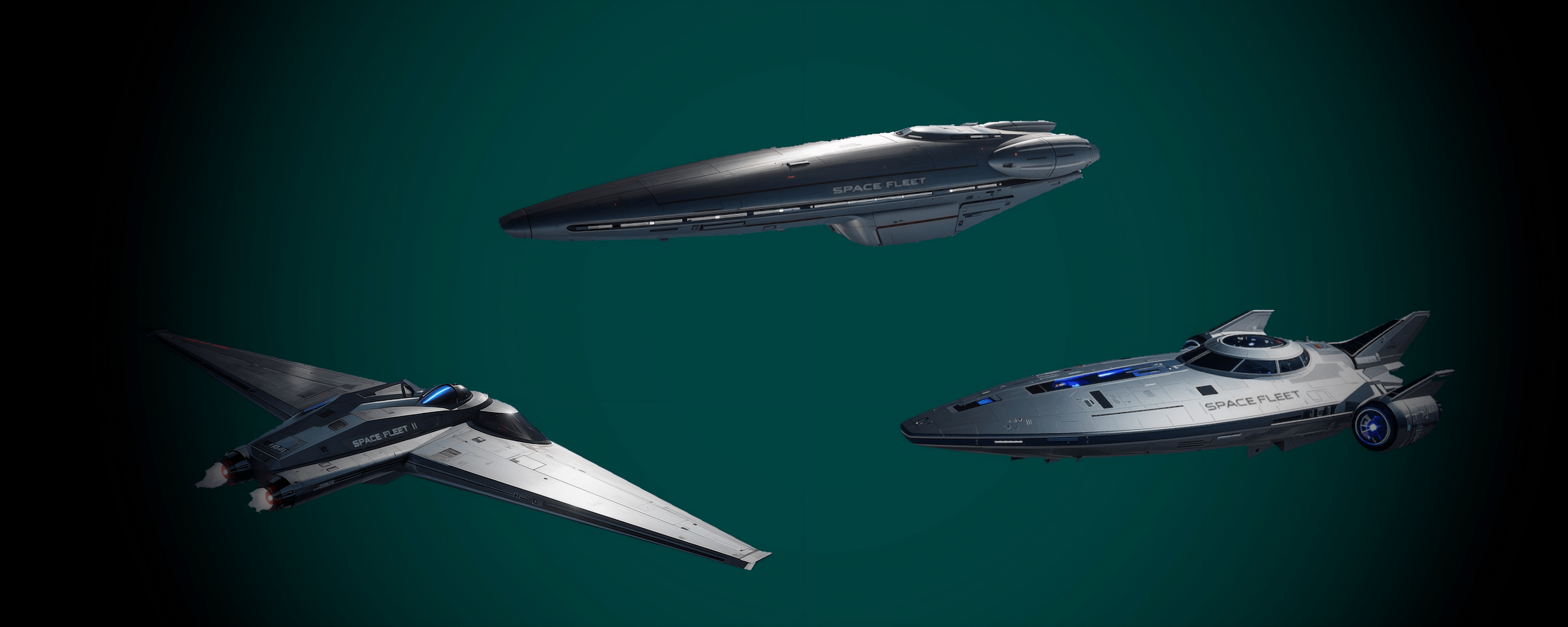
We now have a large number of space vehicles designed for a transport and a range of specialised roles. Here is a flavour.
 Passenger & Transport
Passenger ships for civilian travel between planets or stations, interplanetary ferries and cargo freighters
Exploration, survey & mapping and biological & environmental research ships
Orbital construction platforms and refuel & materials tankers
Manned and autonomous maintenance & repair ships, medical ships and utility craft. Debris detection and remediation.
Mobile habitats, orbital stations & hubs and life-support vessels
This list is not intended to be exhaustive, and includes craft and services controlled but not owned by One.
Some of our best known ships flew in the pioneering Environmental Research fleet - SFS Thunberg, SFS Attenborough, SFS Carson and SFS Maathai. Our subsequent Exploration Fleet featured SFS Polo, SFS He and SFS Amundsen. Our Historic Flight includes a tribute to the iconic Space Shuttle, as featured on our home page. It now supports our educational and publicity programs.
Peruse crews news soon
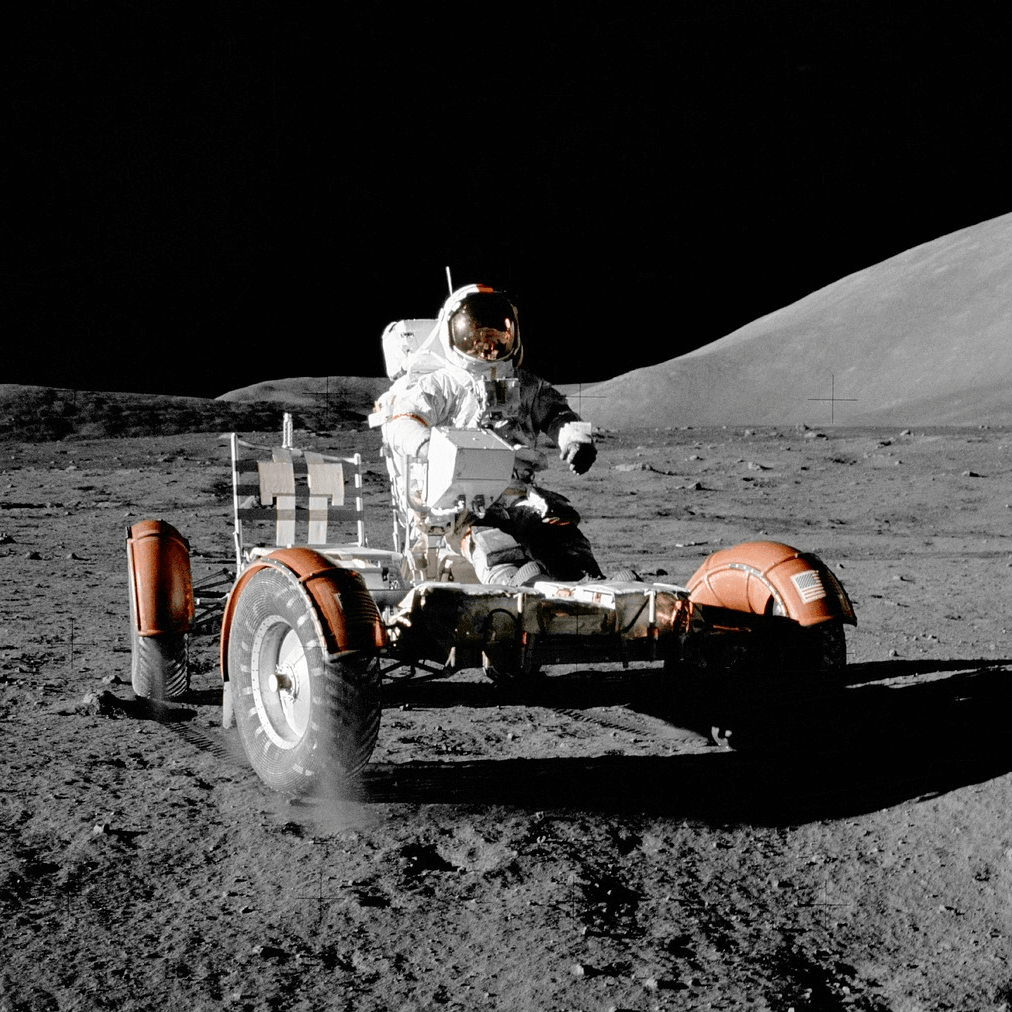

While the exploration of deep space may sound appealing to some, a huge range of roles are required for our organisation to operate smoothly. Here we take a look at our recruitment policy, types of role and current opportunities.
Our recruitment policy enables us to select highly capable, diverse, and mission-ready personnel to support manned and unmanned missions, both spaceborne and on land.
We use merit-based evaluation to ensure candidates have strong problem-solving abilities, teamwork, adaptability, and readiness for high-risk environments. We support diversity and inclusion, with openings available for candidates who are neutral or CGC (cybernetically, genetically and/or cerebrally enriched).
Selected candidates undergo relevant technical training and mission-specific preparation. Career development opportunities and comprehensive health support ensure sustained performance and well-being.
Our policy aligns with GEC requirements and relevant international law. We demand zero-tolerance of discrimination and harassment, and maintain the confidentiality of personal and medical data.
Recruitment requirements are in constant flux, but there are typical specialisms ...
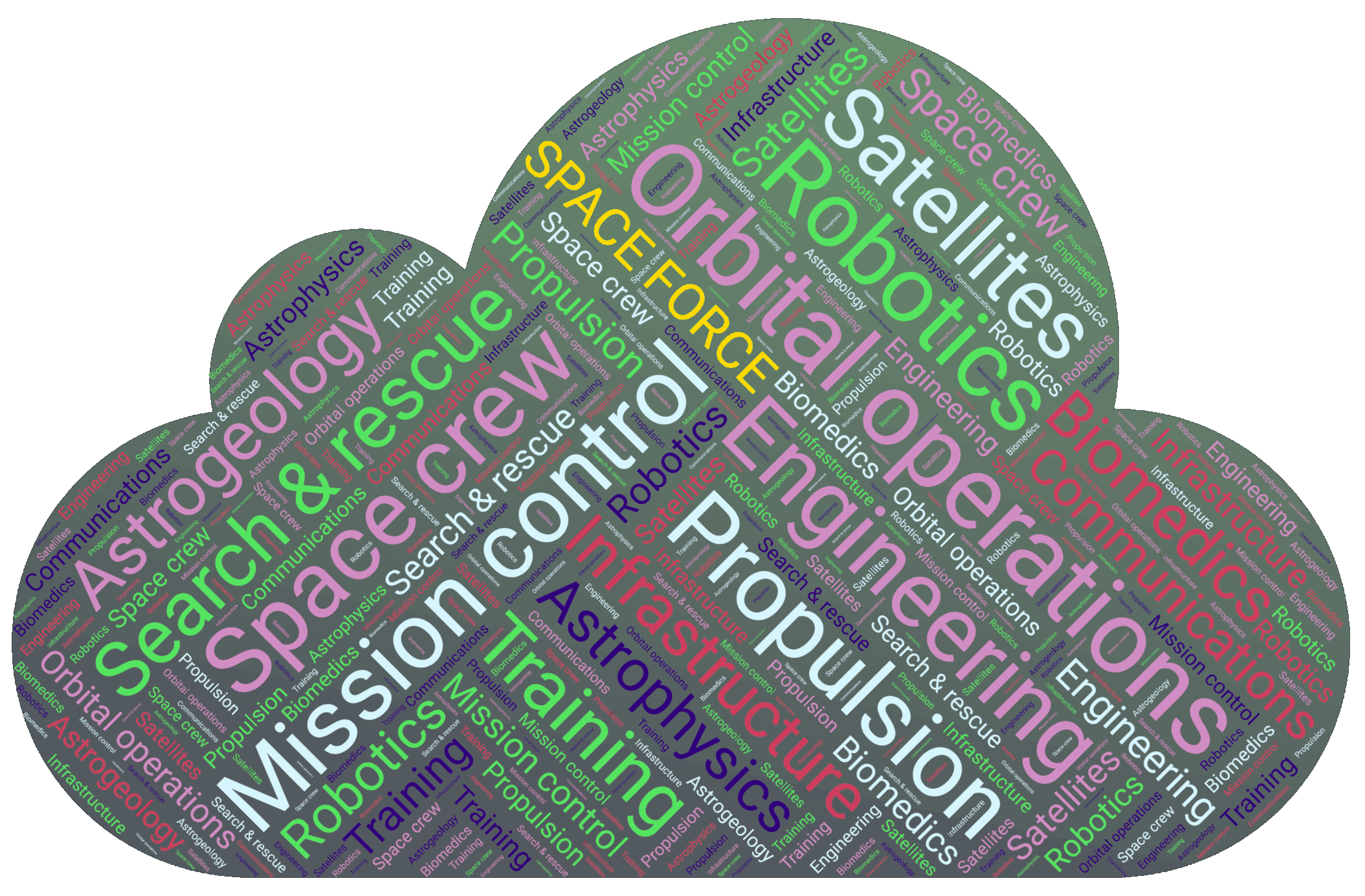
... and here is why you may wish to join us

If you'd like to discuss joining us, or would like further information please contact our Recruitment Office through the usual channels.
The section on your involvement requires more of ours